Applied Camera Techniques
Task 1
Research the use of text which accompanies images. Then redirect the meaning/context of a found image through either the addition or replacement of text.
Research
A series of mediums using text with imagery. From adverts to publications, we can see how the additional text begins to define the image.

.jpg)

.png)
.png)
Experimentation:
Bruce Gilden's images seemed to be a good starting point. It's an example of how work can be interpreted differently. Even without text, his images are highly controversial. By adding text, I both highlighted the leading issue found, whilst also creating an example book cover, similar to his previous publications.
I believe if you were to see one of these designs singularly - for example, the book cover, you may be inclined to believe this is a 'Powerful' image. However, side by side with a piece of critical writing, you are forced to question what you believe in and the original image may become somewhat cheapened.


I began to look at other options of strong text and imagery. I found vintage Vogue covers and Shepard Fairey particularly inspiring.


I then used a found image of my gran to combine both aspects
of my inspiration and change the original meaning. I feel this is a strong outcome and serves as a good example how easily context can be changed using many varying techniques
Found Image

Example Designs


Task 2
Brief: Choose a physical 3-d object in your space. Using your camera investigate your object through consideration of focus, positioning, scale, lighting. Upload the images on your blog, annotate, review and reflect upon the results. Choose two compositions that engender different readings of your object.
I was unsure of where to begin with this task, I began by looking through different photographers and the way in which they represent their subjects. A photographer which I kept returning to was Martin Parr. This was not because I particularly enjoy all of his work, but the way in which he represents his subjects is interesting to me. In many of his pieces he verges on poking fun and a sarcastic tone remains consistent throughout his images. This sarcasm is conveyed/perceived through focus, positioning, subject matter, scale and lighting.
I then began to look at his project "Real Food" and my inspiration for using an egg came from here. I looked at the contrasting ways in which something as simple as an egg can be represented, the difference between an advertising campaign and a Martin Parr piece.
Martin Parr's Real Food:


Advertising:

.jpg)

After researching, I then experimented, using different techniques in order to play into each style. I made clean, attractive advertising images as well as greasy, sickly images
High key images remain consistent throughout marketing. They grab the viewer's attention, work well when partnered with text and create a clinical/clean aesthetic. I knew I wanted to experiment with the technique and create an example advert working together with text.

This was the image which I brought forward. I used it as the concept for my advert design. It's a polished, attractive and simplistic approach to portraying my subject

I feel this concept works well. I believe it to be a finished piece which shines my object (the egg) in a good light, as an advertisement should do. I have used complementary lighting, focus, strong composition and effective scaling in order to manipulate the manner in which my image is percieved.
I experimented with other compositions and lighting techniques, demonstrated here. Although this was a more complex and potentially more aesthetically pleasing image. There is no obvious message nor way in which to perceive the shot. In my opinion it's simply "nice", but that's about it. There is no clear meaning. However, I enjoyed piecing it all together.
I made two main images here, both very similar. I wasn't sure if cooking the egg twisted the brief too much in my favour, as it could be debateable whether it remains the same object. So I made an image of it uncooked on the toast as well as fried. This image was done with the same sarcastic tone that we see Martin Parr often use in his images, and although the uncooked shot was done partially as a joke, I also thought it became a more interesting picture.
As I progressed with this task I began to realise that although I had chosen a challenging item, it was a relatively interesting one too. The fact that I could photograph it in it's different forms opened a lot of doors for me.


I then moved onto making the second image. I wanted to make it greasy, saturated and sickly. Something which didn't scream fresh, free range or organic. Taking inspiration from Parr's English breakfast works, I made a plateful of food to go along with my egg. I followed the idea of creating a "builders breakfast". Wanting to get up close to my subject, creating a harsh image, I began to experiment with focus. Creating an out of focus piece worked. Not only did it give me the intense, 'in your face' feeling which I was going for, but it also proved to be the complete opposite to my first image, creating a different reading/perception of the egg.
I also created two versions of this image, one with the egg remaining in its shell which serves as a backup as well as my intended final piece - the fried egg.


Final Images:


I am happy with these final images. I feel the contrast both aesthetically and metaphorically is very apparent. On the left we see the representation of marketing, with a clean cut, pure image. Promoting the idea of free range, organic, fresh produce. Whereas, on the right we see a very oily, technically incorrect, saturated photograph. The right also includes bacon and sausages, whilst the left promotes animal welfare - an obvious contrast in ideas and beliefs.
Task 3
Search your personal archive and choose 12 images that are/appear to be linked. Consider the narrative you first had in mind and order the images accordingly. Reflect on the story- consider the voice and intentions. Then re-order/re-select/replace (with similar images but differing points of view) several images to shift the narrative. Take on the re-edit from the position of a different voice/context. See how many different ‘readings’ you can produce.
Research:
Bruce Davidson - Brooklyn Gang
With 'documentary' being one of my stronger interests within photography, I am influenced heavily by many different pieces of work, all of which demonstrate successful sequencing. My all time favourite being Bruce Davidson's "Brooklyn Gang" in which he shows the life of a gang of teenagers living in New York in the late 1950's. I cannot do this piece of work any justice through a simple written explanation, although I shall try my hardest:
Davidson got to know the gang "The Jokers" and began photographing them every day. He accessed an area of society that nobody else had - allowing him to photograph a softer, relatable, more human side to his subjects. Speaking on sequencing, Davidson said "Sometimes you take out one picture, and it locks everything else in". From this series (and Davidson in general) I have learned how important social skills are when making images. I have learnt the importance of representation within photography. I have learnt the significance of sequencing when building a narrative. Most importantly, his work inspired my own- "The Roundhouse" and from this project I have learnt innumerable lessons.

I have used an example of Brooklyn Gang on the right which I feel demonstrates Davidson's effective sequencing. Pictured is one of the leaders of the gang "Bengie", and with just these two images we are given a brilliant insight to this life.
The first image depicts Begnie standing angrily up against a wall. He looks to the viewer with an evil stare, creating a tense and intimidating atmosphere. Davidson spoke of this photograph as a turning point, saying that being able to make a picture of Bengie at his angriest demonstrated that nothing was off limits, he had free reign.
We are then shown a very different image - an image of Bengie appearing vulnerable. His head resting in his hand, he begins to look a lot younger and smaller. The anxious body language counters that of the previous image. This is exactly what Bruce Davidson highlights in his series. He highlights the human side to the people on the fringes of society. Although these people were deemed monsters and hooligans, there was another side to them which nobody saw, or possibly chose to ignore.

Mark Power - The Shipping Forecast
Another strong example of documentary photography and the importance of sequencing is Mark Power's "The Shipping Forecast". In which he visits all 31 sea areas of Western Europe that the forecast addresses. He travels to all locations from Iceland to Portugal over 4 years. The piece of work is described as "A response to the clash between the pictures built up in his imagination since childhood and the reality of the places he found."
I have used these two images as an example of Power's ability to reflect upon on himself using sequencing. I feel these are an obvious reference to the contrast between imagination and reality. In the first image we see a child in what appears to be a castle. They look out the window across the vast seascape, creating a very romanticised and almost exciting image. I read this as an example of the preconceived idea Power had of these places as a child when hearing the shipping forecast. He imagined adventures in mystical seaside buildings and scenic locations overlooking the water. I believe the reality which he was faced with more often than not didn't meet these expectations. The second image conveys this. We see a very plain seascape, and although visually pleasing and interesting in its own manner, it is void of that initial excitement.
Below I have given some additional examples in longer form from this work which cover the same idea of preconception and reality. The intended viewing of this piece is through the audio visual on his website, and if you haven't already, I would highly recommend giving it a watch/listen.


Longer Form Example:


Personal Sequencing:
I knew I wanted to use my ongoing project "The Roundhouse" for this task, as it has taught me how important sequencing is. I have spent years getting to know, and photograph the people who visit an abandoned building near my home. The building is due to be destroyed, and I find it interesting how in coming years, nobody will know of the place or it's stories.
Intended Sequence:
This is how I intend my chosen 12 images to be viewed. The main challenge found in this task was the contrast between sequencing for screen and sequencing for print, this difference became increasingly apparent. Below I have demonstrated sequencing intended for screen/online viewing


.jpg)
The Subject:
The sequencing of images in this project is very important in the portrayal of the subjects, and I make sure to be cautious when doing this. I intend on documenting a neutral and honest insight into the building and the people who visit. This is a concentrated example of images which construct a narrative separate from my intentions - creating an unfavourable view of my subjects.


The Building/Architecture
Throughout this project I have became very interested in the history and architecture of the building. I aim to show both the building and people's relationship to it. When you simply remove a few portraits, my series becomes a study of the decaying building.


The People
Over the time of carrying this project out, I have photographed a massive range of people at this location. From local artists, to marines and everything in between. When I began experimenting with taking out images of the buildings, I began to realise the range of different people who I've met and photographed here.


Task 4
Brief: For this task you will need to observe and analyse the soundscape of your own environment. You will need to record the soundscape of your own place in a way we can get a sense of it without seeing it. The soundscape could be long between 40seconds to 1minute maximum.
I didn't necessarily do a significant amount of research for this task. I didn't want to overthink it, I focused on just recording. However, throughout my recordings I consistently thought about Jim Greco's "Jobs? Never!!" which makes brilliant use of ambient sounds, music and silences. This film is of really big inspiration to me.


I wrote down any initial observations and thoughts which I had. This helped me analyse my surroundings and get an idea as to where to start.
Experimentation
I live on a main road which also happens to be beside a fire station. Two sounds which I hear everyday is the sirens of the fire engines leaving and the sounds of passing cars. I experimented with recording these. I found recording the fire engines most challenging, due to their unpredictable nature.
I began recording daily observations and simulating my routine, seeing what became interesting when boiled down to just the audio. I kept noticing my radiator, which ensures there's never complete silence in my room. It makes a subtle rattly noise constantly when it's on - something which I've learnt to block out over the years. I also simulated listening to music in the shower, something which I always deem strangely cinematic.
With this course being 100% online during the current pandemic, I have spent more time at my laptop than ever over the past year. I experimented with recording myself working, not typing for effect or making any extra noise. Just actually working. I also recorded every single silence during our online calls for a few days and compiled them. This is a silence that I find increasingly deafening as time goes on.
Everyday, particularly throughout lockdown, I spend at least a hour everyday playing instruments. These instruments are a big part of my daily routine and soundscape/environment, so I felt experimenting with these would be crucial to this task.
My final 60 second piece uses a mix of different clips, giving a sense of my environment and soundscape. I have created this audio through different stages of experimentation and analysing my surrounding soundscapes. This is a very layered piece of audio, which can be read into in differing ways. It is based around the idea of being inside, particularly focusing on the theme of online learning and the pandemic. My radiator clicks, the silence of the calls plays throughout, cars pass by on the busy road outside, fire engines scramble out of the nearby station, I click away on my laptop, music continues in the background. As the sirens fade into the distance by the end of my audio, it ends apocalyptically. Clashing with The Rolling Stones - Wild Horses, which calmly plays in the background as I focus on my work, creating a somewhat oblivious tone to the carnage which appears to be happening outwith my bedroom walls.
Overview:
.png)
PROJECT
BRIEF:
Create a 1.5-2minute audio-visual piece by interviewing someone via video call who inspires you. Include 6-12 images and at least 10-15 seconds of moving image. You will tell their story using still images, voice recordings and video, but without having them appear in the visuals. Direct your subject, taking virtual images (screenshots) which document their environment as well as adding additional recordings/images from outdoor environments that build this narrative.


For this project, I began by brainstorming any initial ideas which came to me, all ideas which I was drawn to and which interested me. Moving forward, I began narrowing my options down, putting some ideas on the backburner and bringing others forward. It was a process of doing this for around a week until I had decided that I was drawn to the idea of covering traditional American hobo/beatnik culture. For years I have imagined the incredible stories that some of these people must have, delving deep into the rabbit hole of The Beat Generation, it's a part of American culture which fascinates me.
LOCUST SONGS

My Subject:
I will be interviewing Locust Songs, a San Francisco based artist. Locust has travelled across the world freighthopping and hitchhiking, and I want to get an insight into this adventurous life and how he lives in the city as a working artist.
I have been watching Locust's YouTube videos and followed his art for just under a year now. I discovered him June 2020, whilst watching video diaries of peoples experiences travelling across the USA. I was drawn to the authentic nature of his videos. Predominantly filmed in the early 2000's, it was a time before Instagram and YouTube dictated peoples reasonings for 'adventure'. The sense of living in the moment and true adventure really comes across throughout these. They inspire me. They inspire me to make authentic work, be an authentic person and have authentic experiences. I'm happy that Locust is willing to take part in this project, and I look forward to being able to speak with someone who's work I admire and hope to learn more about him and his interesting lifestyle.
Research and Inspiration
I began my research for this subject by furthering my knowledge of this culture. I watched different documentaries, and focused in on Locust himself, making sure I had studied every one of his videos.
In terms of interview techniques, I am a big fan of Louis Theroux, who is an expert in the field of remaining quiet whilst interviewing, I took this with me into the interview, ensuring I focused on how well I listened. Another big influence for me is Andrew Callaghan, who makes incredible documentary videos/gonzo journalism in America, focusing on the people on the fringes of society. I am confident in my ability to speak to people, so I didn't necessarily feel anxious or underprepared when going into this interview. I tend to find this helps me in situations of this nature.
The Interview
Questions
We conducted our interview on April 7th, using Zoom. The interview went very well, with a range of different amazing stories and themes covered. We spent 1 hour speaking and a half hour creating images of his environment. I think there will be a lot of different routes which I can take when editing this down, as I ensured I asked a range of questions that were not necessarily specific to one certain theme. Locust told me about his travelling adventures and life as an artist in San Francisco. I'm very glad that I pursued this person and topic in particular. It's something I've always wanted to know more about and combined with my carefully curated questions, it has given me a very versatile interview to work with.
On the run up to the interview, I knew I wanted images of his artwork, studio, computer setup and view out into the streets of San Francisco. We got all of these shots and I'm now excited to piece these together and begin to build a narrative.
.jpg)


Contact Sheet of Screenshots
Examples of Some Images Brought Forward

.jpg)


Initial Audio Experimentation
I spent a long time experimenting with this project. There were many approaches which I could take and so many topics to cover. What became key to this process, wasn't always knowing what to feature in my final 2 minutes, but knowing what to leave out.
Originally, I created 2 short audio segments from the interview. These allowed me to get to understand how I planned on editing this audio, and give me an idea for how I wanted to move forward. For example, from these I realised the naturally slow tone that Locust spoke with, I learnt that this needed to be fixed, otherwise 1/4 of my final 2 minutes would be taken up by pauses and silences. Being given such a short time, I knew that every second counted. It was these two tests that prompted me to make my podcast series. These cuts gave me an insight into the themes we covered and allowed me to better understand the audio that I was working with. In order to expand on this I decided I'd make the podcast episodes, which were of massive benefit to me. These podcasts were made in order to learn.
Each 2 minute podcast episode, covers a certain topic and Locust gives an insight into his life. The three topics I covered were; The importance of Travel, Near Death Experiences and Living in San Francisco as an Artist. I used these episodes, to experiment with different techniques, from using colour, different ambient sounds, to different editing techniques. This process guided me in where I wanted my project to go and allowed me to understand what worked with my subject and what didn't.
Podcast Series
Podcast #1 Travelling
My first podcast covers the topic of travelling and its importance. In this episode I experimented with using my voice as an introduction, combining both colour and monochrome imaging, creating a title image, incorporating my own shoot, ambient sounds and moving image. I enjoyed making this and it gave me a deeper insight into my project and how I planned on moving forwards.
I'm glad I experimented with creating my title slide, which is something I plan on bringing forward to my final piece. Throughout the video I used 2 different audio tracks, one being a copyright free track of the tuning of an Indian swarmandal harp. The other being an excerpt of audio from Locust playing the sitar (permission gained). Both intertwining with my subject and the narrative that I was building, which was dominated by the theme of India. I felt I needed to experiment with monochrome and colour, which I hoped would help me decide if I had a preference, or if the aspect
of combining both worked well together. Through doing this I became torn, as I think both are successful. Moving forward I decided I would experiment further and draw conclusions having expanded on it. The moving image and additional audio which I used is from my subjects YouTube channel, which I received his permission to use. I added my own creativity and input here, by doing a shoot with my laptop (contact sheet below). Inspired by Fran Monks, and other photographers who have been taking unique approaches to virtual photoshoots during the pandemic, I decided to give it a go. I'm really happy with the outcome and set which I created, I feel this is an aspect of my project/experimentation which gives me great creative freedom, and this is a technique which I will be bringing forward. For example, here I was able to overlay moving image and Locust's artwork onto the scene which I had created, which I think has a really good effect and gives further context to my work. From the beginning I was quite certain I didn't want to use my own voice in any of these pieces, and this is why I got Locust to give a brief summary himself when we had our Zoom call. However, I attempted this approach nonetheless, and I'm glad that I did. I don't think it's as bad as I had initially imagined, but it's not a feature which I feel fits the style of my project. My interview will be focused on Locust, and in a sense I feel my involvement/speaking at the start somehow takes away from that. I'm glad I was able to discover this at an early stage and experimented with it successfully. I went out having collated my audio for this piece and took some shots which I felt tied in with the theme of travelling. This was a challenge, but I managed to get a couple which I was happy with. I used the image of a plane soaring through the empty skies at the end, which worked in unison with the audio and the minimal, yet strong message which it ends on..."It's worth it".
General Overview
.png)
.png)
This is an example of my cut up audio, which cuts out any unnecessary pauses or gaps. As mentioned previously, this saved me an incredible amount of time in the interview, although proving to be quite a tedious task.
Laptop Shoot Contact Sheet:

Travel Images of Environment Contact Sheet, digital & 35mm:

Parametric Equalizer
.png)
Throughout my many cuts and final film, I used the parametric equalizer tool on my audio, particularly background/ambient sounds. I was using the "Generic Low Pass" preset, and lowering the frequency, as pictured above. This gives a very effective tone to the audio, appearing quite distant. I adjust the frequency until happy with the results, below I have given an example of a siren with and without this technique applied.
Without frequency adjustments:
With frequency adjustments:
Locust Video & Artwork Used From His Website:
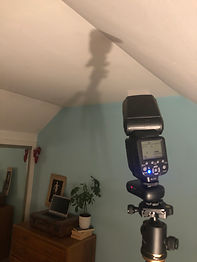
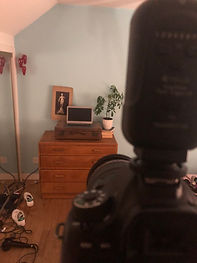
Both shoots I did for this podcast were successful, although I found creating environmental imagery which related to Locust's locations (India) tough. To overcome this, I shot versatile images which related to the general theme of travelling as a whole. For example, shooting the ocean, planes, simple landscapes etc. My laptop work was more able to tie directly into specific themes due my use of post production techniques. I used Photoshop and Premier Pro to overlay Locust's work into this composition, which worked successfully. This is an image which I can now bring forward through my experimentation and potentially use in my final.
Podcast #2 Living as an Artist in San Francisco

San Francisco is an area which has always grabbed my attention. From the beat poets, to the world class musicians, it's an area which is incredibly well known for it's iconic art scene. I was interested in getting a deeper understanding of this, opposed to my romanticised and outdated knowledge gained from books such as The Dharma Bums.
I used this podcast to experiment with colour, creating the entire piece in this manner. I think this worked really well with the theme of San Francisco, the sun faded tones complimenting the piece throughout. However, I think this is very theme dependant. I explored the use of ambient noise further, using copyright free sounds of the ocean and downtown city, which gave context to my subjects location and helped construct a much stronger narrative. I made effective of the "Exponential Fade" effect on my ambient
sounds, which helped me smoothen out any harsh transitions between audio clips. I reused one of my laptop shoots here which demonstrated to me the flexibility of this image, and that I could definitely use it moving forward to my final piece.
General Overview
.png)
Post Production of Screenshots:
Over the course of these 3 podcasts, I really got to grips with the aesthetic that I wanted my screenshots to have. I found the digital, low quality didn't add a particularly nice finish to this work, no matter how much I played with temperature, highlights, contrast etc. Where I really began to see a difference in these was when I started adding grain, I feel this turned the low quality, pixelated images into much more pleasing pieces to look at. They came from low quality digital screenshots, to having a timeless analogue quality. Below I have demonstrated an example of this.
Exponential Fading Between Clips:
Original Screenshot:
Podcast #3 Near Death Experiences
My final podcast covered the theme of near death experiences, which became a prominent part of our interview. With the outlandish lifestyle of Locust and his freight hopping, this has landed him and his friends in some very close encounters. It was a topic which I wanted to expand upon, as well as use this to experiment with different approaches.
After my dilemma during my previous podcasts regarding colour, I thought I would attempt to create a completely monochrome piece. I feel this worked well, from this I came to realise the versatility of black and white. It didn't necessarily matter on the subject, monochrome had a timeless style which suited all of my themes. It was at this point the seed became planted for a final piece which followed this style. I decided due to the stark tone of theme, I would try leaving
.png)
Art Overlaid:


Additional Grain, Reduced Contrast, Raised Colour Temperature:
out an introduction and any additional ambient sound, with the concept of it being more raw and hard hitting. I don't believe this is how certain aspects of it came across. I do believe it's more raw, however I feel it becomes slightly stripped of character when its solely Locust's voice throughout. This demonstrated to me the importance of background audio in order to give context to the theme. Following the success of my laptop shoot, I decided to follow this up with another one, intended to show my environment. In a time where I'm doing almost everything online, I spend most of my day at my desk and it has become a bit of a chaotic mess recently. I turned this into an image opportunity and I am happy with the outcome. In post production, using Premier Pro to overlay a snippet of one of Locust's films onto my screen. At the end, I remove the image, leaving just the video, which I felt replicated the lights going out, bringing the sequence to an effective close. Following my interest of this theme, and with the consistent topic of freight train hopping, I began to accept that I wanted to pursue my subjects train hopping adventures as a final theme. This was why I had initially chosen my subject, however due to the barrage of interesting themes which we covered during our interview, I feel I became slightly lost. This podcast in particular put me back on my original path. On the back of this, I went out to a local abandoned coal depot, which used to freight coal from the open cast mines all over Britain, this shoot is expanded upon below. Whilst making this podcast, I came to realise that I was using the same screenshots repeatedly. I then decided I would go back through me and Locust's recorded Zoom call and take additional compositions that I could see within his environment. This proved to be really important, and I'm glad I recognised this before continuing with my project further.
General Overview
.png)
Second Laptop Shoot Contact Sheet:

Video Overlaid:
This is just a collection of moving image and audio that I recorded from my visit to the train yard. I filtered through this, using certain clips that I felt worked for the final piece. None of this is edited or cut. I was experimenting with shooting in both colour and black and white. However, came to realise that I might as well shoot in colour, so I'd have the option to change to between the two within post production if I wanted. This is why there's a combination of both:
Coal Depot Shoot:


I knew as soon as I heard Locust's stories where I could visit to get some shots which could be perfect. Half an hour from my house lies an abandoned train yard, which operated as a trainyard for over 30 years. Remnants of coal and parts of trains lie scattered across the several disused zig-zagging rails. Once a centrepiece in the areas economy, social life and infrastructure. It now lies desolate. I shot a variety of work here - moving image of passing trains, landscapes images, portraits etc. The natural cinematic nature of train tracks worked with my project, I felt I came away with a range of different strong images.
Moving forward with this work, I decided to leave out any distinguishable portraits. I felt this was more in keeping with our brief, and the stories which were being told. I used the same anonymous, silhouetted figure over several images and short videos. This character symbolises Locust, and the lifestyle which he lives. A life of being in the shadows, invisible, wandering the railroad. The traditional American hobo/beatnik wants to get away from society, wants to be a nobody, wants to travel alone and silently, leaving no trace. This character always faces away from the viewer. Except once, when hiding amongst shrubbery, simultaneously as Locust tells the story of bumping into other people who he knew - this is the only occasion when the viewer gets a hint of visual identity, tying in with the audio. Throughout this project, I aimed to focus on experiences over identity. And I'm grateful that the brief pushed me in this direction.
Collection of Moving Image/Audio Clips From Coal Depot:
Final Submission:
LOCUST SONGS, A FILM BY LEWIS BAILLIE
I am really happy with this final piece. I think I have successfully experimented, and brought forward several different techniques which I have tested and expanded upon. My final film focuses on Locust's experiences when hopping freight trains across America. As mentioned previously, I felt relatively bombarded with stories and themes, giving me several different routes which I could take whilst completing this project. I had to take a fraction of these stories, and put this into a concentrated piece of work, without it coming across as too rushed or choppy. This proved to be difficult, however I feel I achieved this. I wanted to portray the idea that there are several other stories, which may well be just as exciting, leaving the viewer wanting more. I theorised this when working on it by thinking of the film almost like a trailer - a short snippet of work giving an insight into the bigger picture.
I used 6 virtually created images from Locust's environment, 4 images created by myself in my own environment/outdoors and about 29 seconds of moving image (including overlays onto imagery). These images from a series of locations are carefully sequenced, working with my audio to build a narrative and add context throughout the film. It's quite a reflective piece, on Locust's behalf. His environment around him plays as he reminisces over past adventures, currently stuck indoors. Particularly the shot of his old phones with his films overlaid, I used my previous experimentation here, expanding on my initial tests with overlaying moving image. The idea of this shot being that these are all displaying his old memories. I still wanted his surroundings to tie into his stories, which I feel I was successful in doing, although this was also challenging. The piece ends looking out of his window onto the San Francisco streets, on quite a nostalgic note. How times have changed, he's indoors, in one location permanently for now, yet he dreams out of the window. As the picture cuts to black, he concludes: "It was worth it....It was fun". This is a technique I experimented with throughout my podcasts, giving an impactful conclusion to the work. I effectively used ambient sounds which I recorded in my outdoor environments, including the coal depot (train) and fire station (sirens), these sirens were brought forward and expanded upon from task 4. I think these add a certain immersive element to my piece, especially when paired with the post production techniques used and experimented with, such as using the Parametric Equalizer tool.
General Overview
MUSIC
.png)
Overlaid Videos:
An idea I've had for a long time, has been to make a film and write music to go with it. I was able to turn this idea into a reality here. Once I had created all the visuals and pieced together my audio, I sat down at the piano and began messing around, also bringing my concept of recording music forward from task 4. From watching my visuals and listening to my subjects stories, the music came to me relatively quickly. I created a piece of music which I felt supplemented my existing audio, giving a dramatic and slightly melancholic feeling to my final piece, without being overpowering.
original recording before parametric equalizer adjustments:
Edits Made To Piano:
.png)
There isn't any further experimentation to expand upon here, I used my podcasts to carry all of this out and combined all this testing to make my final film. I think you can see some dramatic technical improvements throughout - for example, using the phone shot to tie in Locust's environment with my video overlaying, his own narration and memories. The monochrome imaging, use of Exponential Fading, Parametric Equalizing, overlaying videos, use of my own moving image, shoots, recording of ambient sounds - I have carefully considered all of this, only bringing forward what I had experimented with and found to be successful.
Reflective Statement - Lewis Baillie
I have really enjoyed carrying out this module throughout the year, I think each task has been unique and thought provoking. When I reflect upon my own performance, I am happy with what I have created, particularly within our current lockdown environment. I believe I have taken unique approaches to each task, strictly following the briefs, successfully experimenting, using several differing techniques and approaches. My favourite aspect of this module was definitely the final project, I worked hard on this and brought forward different lessons learnt throughout each task, utilizing these effectively to create a final piece that I am proud of. At times, the aspect of online learning became frustrating. However, the tasks seemed geared towards this which definitely helped with my motivation. Similar to our landscape module, I think one of my biggest takeaways has been realising how much original work I can create from within my own home.